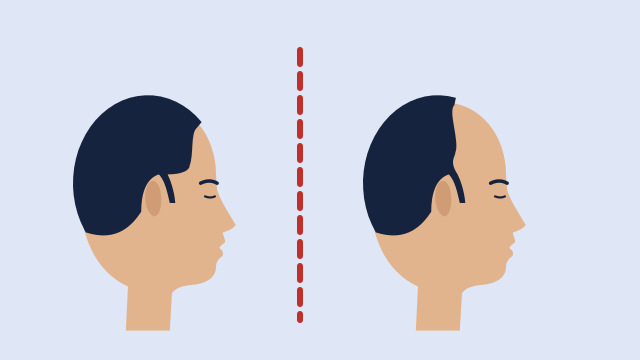
A mature hairline and a receding hairline can look identical on any single day; the difference is that a mature one moved once and stopped, while a receding one keeps moving. So the useful question is not "where is my hairline?" but "is it still going?", and you answer that with time, close-up looks at the hairs themselves, and sometimes a dermatologist. This guide gives you three checks, explains why online measurements do not settle it, and says when to stop checking and book an appointment.
What "mature hairline" means
A mature hairline is the adult hairline that replaces the low, rounded line most boys have. The change is usually modest: the line lifts a little and the corners at the temples become more defined, so the whole edge looks straighter or slightly M-shaped. It is common enough that many people who notice it assume the worst, when what they are seeing is the end of a change rather than the start of one.
The term is informal. You will not find it defined with a number on a drug label or in a dermatology society's patient pages. That matters, because it means anyone telling you exactly where a mature hairline should sit is giving you their rule of thumb, not a standard.
What "receding hairline" means
A receding hairline is a hairline that keeps moving back, and in men it is usually the start of hereditary hair loss. MedlinePlus Genetics describes androgenetic alopecia in men as loss beginning "above both temples", with the hairline receding over time into a characteristic M. The American Academy of Dermatology says that a receding hairline or a bald spot on top is often the first sign.
Two things separate it from a mature line. It continues, and the hairs at the edge change. DermNet describes pattern loss as follicles producing hairs that are progressively fewer and finer, which is why a receding edge often looks soft and wispy before it looks bare.
Check one: the photo diary
The single best test is a set of photographs taken the same way over months. It is free, it pays us nothing, and it answers the question the mirror cannot.
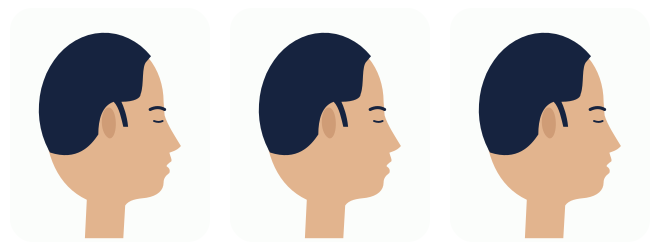
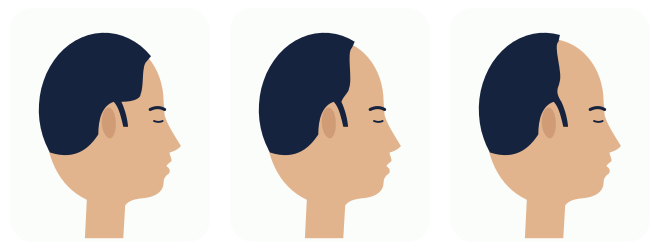
The same photo, every three months
Hair pushed back, same light, same angle. What you are looking for is movement, not position.
Matured and stopped · the corners hold still between photos
- Photo 1
- +3 months
- +6 months
Still receding · the temples deepen photo after photo
- Photo 1
- +3 months
- +6 months
How to take them so they are comparable:
- Push your hair straight back off your forehead, dry, with no product.
- Stand facing a window in daylight, not under an overhead bulb, which makes every scalp look thinner.
- Take one photo straight on and one from each side at the same distance, with the camera at eye level.
- Save them with the date in the file name, and repeat every three months.
After a year you will have five sets. Lay them side by side. If the corners moved between the first two and then held still, you are probably looking at a hairline that matured. If they keep creeping back set after set, that is recession, and it is worth discussing with a doctor.
Check two: the hairs at the edge
Look closely at the first few millimetres of the hairline, ideally with a magnifying mirror or a phone camera zoomed in. In a stable mature hairline the hairs at the edge are much the same as the hairs a little further back: similar thickness, similar length, similar colour. In a receding hairline the edge often carries fine, short, lighter hairs, a sign of the miniaturisation that pattern loss causes.
This check is harder than it sounds, because some fine hairs at the very edge of a hairline are normal for everyone. What you are looking for is a zone of noticeably thinner hair sitting in front of thicker hair, especially at the temples. A dermatologist does the same check with a dermatoscope, a magnifier with its own light, and can see far more than you can in a bathroom mirror.
Check three: the rest of the picture
The hairline is only one clue. A few other things shift the odds one way or the other:
- Family history. Pattern hair loss runs in families; the NHS says it usually runs in the family, and a 5% minoxidil label treats "no family history of hair loss" as a reason not to use the product at all.
- The crown. Thinning at the top or back of the head alongside the temples points toward pattern loss.
- Symmetry. Pattern recession tends to move on both sides. One temple racing ahead of the other is still usually harmless, but it is worth mentioning to a doctor.
- Your age. MedlinePlus Genetics notes that androgenetic alopecia can start as early as the teens, so being young does not rule it out.
Why a ruler will not settle it
You will find confident measurements online: a mature hairline sits a finger's width above the highest forehead crease, or so many centimetres, or it rises by a set amount and stops by a set age. We looked for the source of these numbers and every version we could trace came from a clinic or product blog, and the versions contradict each other. None came from a drug label, a dermatology society or a study we could read.
That is why we do not print one. Forehead heights differ naturally between people, and a line that sits high on one face is where it has always been on another. Movement over time is a real signal; distance from a crease on one day is not.
When to stop checking and see someone
Self-checking is sensible for a hairline that looks ordinary. Some signs mean a doctor should look at it now rather than in a year, because the conditions behind them can scar follicles permanently:
- loss along the sides of the head as well as the front, or eyebrow loss, which the AAD links to frontal fibrosing alopecia;
- redness, itching, scaling, bumps or pain along the hairline;
- soreness from tight styles, or skin that lifts when hair is pulled, which the AAD lists among warning signs of traction alopecia;
- loss that is sudden or comes in patches.
Even without those signs, a GP or dermatologist appointment is the fastest way to a real answer if the question is worrying you. It pays us nothing, and it is worth more than any checklist on this page.
What to do with the answer
If your photos show a hairline that matured and stopped, the practical response is a haircut that suits it and nothing else. If they show a line that is moving, you have choices, and the first is simply how much it bothers you. Our main guide to the receding hairline and what can be done about it sets out every route, including what the medicine labels say about the temples specifically. And if you want to know what the earliest stages look like up close, read the early signs of a receding hairline next.